Living by Feelings
For much of my life, I didn’t realize how many of my beliefs were rooted in emotion. I thought I was being thoughtful, even logical — but if I’m honest, most of it was about what felt right. My arguments were often shaped by compassion, or outrage, or the sense that something simply wasn’t fair. My feelings were sincere, but they weren’t always reliable guides to what was real.
The Domino That Fell
One of the biggest turning points for me was digging deeper into the contrast between socialist ideology and the foundation upon which America was built. For years I assumed socialism was simply a more compassionate, “fair” system. But when I looked at its history, I saw the devastation it left behind — broken economies, silenced voices, human suffering multiplied. And then I began to study America’s founding ideas: individual liberty, checks and balances, the belief that our rights come from God, not government. That’s when the domino fell.
No one convinced me. I wasn’t argued out of being a liberal. I wasn’t brainwashed. I simply learned more. And the more I learned, the more I realized I had been standing on shifting sand. The truth revealed itself: that no matter how flawed capitalism is, no matter how imperfect America is, it is still by far the best system human beings have ever created.
At the heart of it all is the First Amendment — the right to speak freely, to question, to argue, to test ideas in the open. That freedom is what allows us to wrestle toward Truth together. Without it, emotion rules unchecked, dissent is crushed, and deception thrives. With it, we can expose lies, challenge power, and — if we’re willing — arrive at Truth.
The Beauty of Youthful Compassion
There’s a famous phrase: “If you are not a liberal when you are young, you have no heart; if you are not a conservative when you are old, you have no brain.” Regardless of who said it, the essence resonates. My story is not unique. The passionate, idealistic revolutionary, fueled by a desire for justice, is beautiful. Young people see the brokenness of the world and long for equality and peace. That impulse comes from a good place.
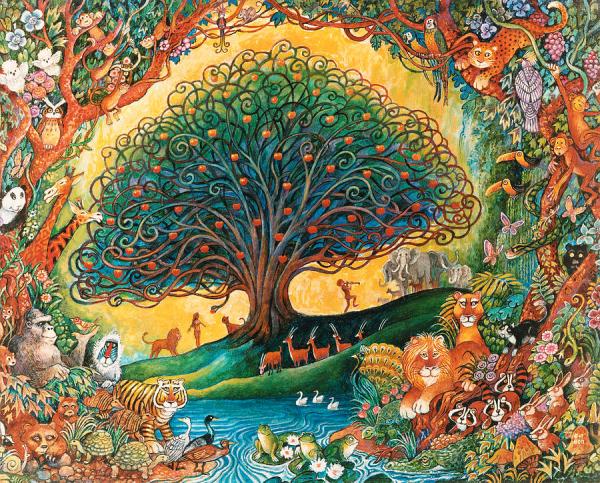
In fact, I’ve come to believe that this youthful compassion is itself further proof of God’s design. Deep down, every human heart recognizes injustice and longs for justice. We can’t help it — it’s woven into who we are. That longing is an echo of Eden, a reminder that we were made for a world without corruption, where fairness and peace weren’t ideals but reality. But as history and Scripture both testify, while the longing is real, human nature itself is fractured. We desire good, yet we stumble into evil.
When Relativism Collapses
Philosophy helped me see why this matters so deeply. Relativism — the idea that truth is subjective and personal — sounds compassionate, but it collapses under its own weight. If all truth is relative, then the very statement “all truth is relative” cannot itself be true.
Even modern thinkers who tried to deconstruct absolutes could never escape the fact that to argue anything at all assumes some standard of reason that is not up for debate. The moment someone makes a claim — whether about justice, morality, or even the denial of truth itself — they are appealing to rules of logic and coherence that they expect others to recognize. In other words, to deny truth, you already have to use it.
This realization shattered my old way of thinking. Every appeal to fairness assumes there is such a thing as fairness. Every demand for justice assumes there is such a thing as justice. If these concepts are only feelings or preferences, then they lose all authority — they become nothing more than the shifting mood of a crowd. And history shows what happens when societies abandon objective truth: what’s left is power, force, and tyranny.
Aristotle saw this when he wrote that first principles cannot be denied without being used. Augustine recognized that God Himself is Truth — the light by which all else is seen. And even today, those who deny absolutes still depend on them every time they open their mouths.
Hope in Truth
And so I came to see: Truth with a capital T exists. It does not shift with culture, bend to my emotions, or collapse under human weakness. Truth is what reality looks like when all illusions are stripped away. Our responsibility is not to invent it, but to seek it — and to submit to it once found.
That’s what ultimately transformed me from a liberal to a conservative: not persuasion, not pressure, but the pursuit of Truth. And that is where real freedom begins.
What gives me hope — what gives me faith — is that anyone can arrive at Truth. God did not hide it away for the few, but placed it within reach of every heart that seeks honestly. Yes, we will all see life differently, and our unique experiences will shape the solutions we offer. But if we can first agree on the foundation — the fundamental Truth that transcends us all — then our differences can become gifts. Out of that unity, we can offer the world solutions no one else could, because each of us is so uniquely made.
That, to me, is what makes me love God and believe in Him: the conviction that Truth is not only real, but that it is meant to draw us closer together. And that in finding it, we are finding Him.

 Echoes of Eden