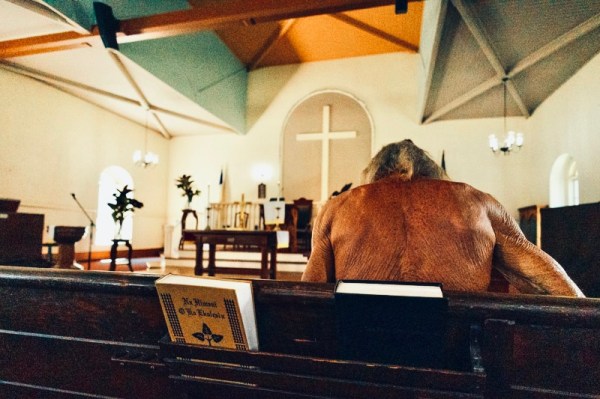
In today’s chaotic cultural moment, we’re witnessing something fascinating and deeply symbolic: a growing number of people—especially young men—are leaving the modern, often ambiguous expressions of Christianity and finding their way back to older, more structured forms of faith.
Catholicism and Eastern Orthodoxy are growing, not only in numbers, but in cultural resonance. Men in particular seem drawn to the hierarchy, mystery, and formality of these ancient rites. After decades of what many experience as a feminized, overly therapeutic version of Protestant worship—soft music, casual theology, and an often liberal moral framework—Orthodoxy offers something profoundly countercultural: discipline, reverence, and order. It is the architecture of belief, not just the emotion of it.
And in many ways, this swing makes sense. We are a generation raised in fragmentation. In the Protestant world, churches have multiplied into thousands of denominations and independent ministries, each interpreting Scripture in their own way, with no unified standard of tradition or authority. The once-radical freedom of sola scriptura (Scripture alone) has, over time, morphed into a kind of religious relativism. If every pastor and every believer is their own final authority, then who speaks for the faith?
This “rogue Protestantism” has left many hungry for something more rooted. In the wake of theological drift and cultural compromise, Orthodoxy and Catholicism stand like stone cathedrals in a storm. And yet, in our eagerness to return to structure, we must not forget what sparked the Protestant movement in the first place—or what it ultimately gave to the world.
The Fire That Started It All
The Protestant Reformation was not merely a rebellion against church authority—it was a reclamation of truth. Martin Luther and other Reformers saw a Church that had become too entangled with political power, too buried under layers of bureaucracy and corruption, too far removed from the simplicity and power of the Gospel.
Their cry was simple: return to the Word.
Return to the authority of Scripture.
Return to a personal, living faith in God—not one mediated only through priests or sacraments, but one that engages the heart, the conscience, and the mind.
This spiritual movement didn’t just reform the Church—it reformed entire nations. The Protestant work ethic, the emphasis on the dignity of the individual, and the idea that each person could read, interpret, and act on Scripture for themselves laid the groundwork for modern democracy and liberty.
It is no accident that the American Constitution was born in a Protestant context. The belief in limited government, personal freedom, and moral responsibility grew out of a theological worldview that trusted the conscience of the individual under God. Protestants believed that each soul could stand directly before their Creator—and that no king, pope, or bureaucracy should stand in the way.
The Danger of Losing the Balance
And so we find ourselves at a crossroads.
On one side is the chaos of hyper-individualism—churches that have lost their theological backbone, where truth is relative and tradition is optional. On the other side is the growing allure of ancient order—a return to creeds, incense, fasting, and mystery. Both impulses contain truth. Both responses are, in part, reactions to our cultural crisis.
But we must not swing so far back into tradition that we forget the why behind the Reformation. Just as we resist the soul-flattening effects of socialism’s bureaucracy in government, we must also resist the temptation to outsource spiritual responsibility to institutions alone. The Protestant soul must remember that structure without conviction becomes hollow ritual. And conviction without structure becomes chaos.
A New Reformation?
What we need now may not be a return backward, but a reformation forward—one that honors the sacred roots of tradition while reigniting the personal fire of faith. One that understands why young men crave strength, order, and masculinity in worship—but also why freedom of conscience, Scripture-centered theology, and resistance to centralized religious control still matter.
We need both pillars: the sacred tradition that grounds us and the radical freedom that empowers us to live it out.
If Protestantism is to survive and thrive, it must remember its fire—not just its form. And if Orthodoxy and Catholicism are to truly offer healing to the modern world, they must resist becoming merely beautiful structures that ask no questions.
The garden we lost was both structured and free. Eden had order, but it also had the wild, living presence of God walking among us.
May we return to that balance. May we hear the echoes of Eden again.
 Echoes of Eden